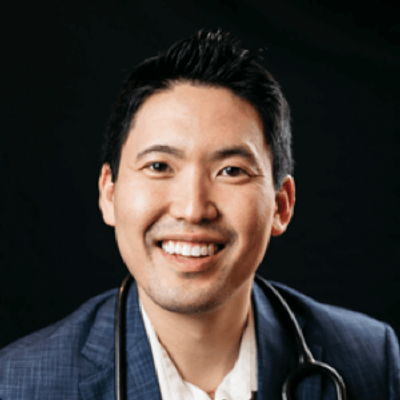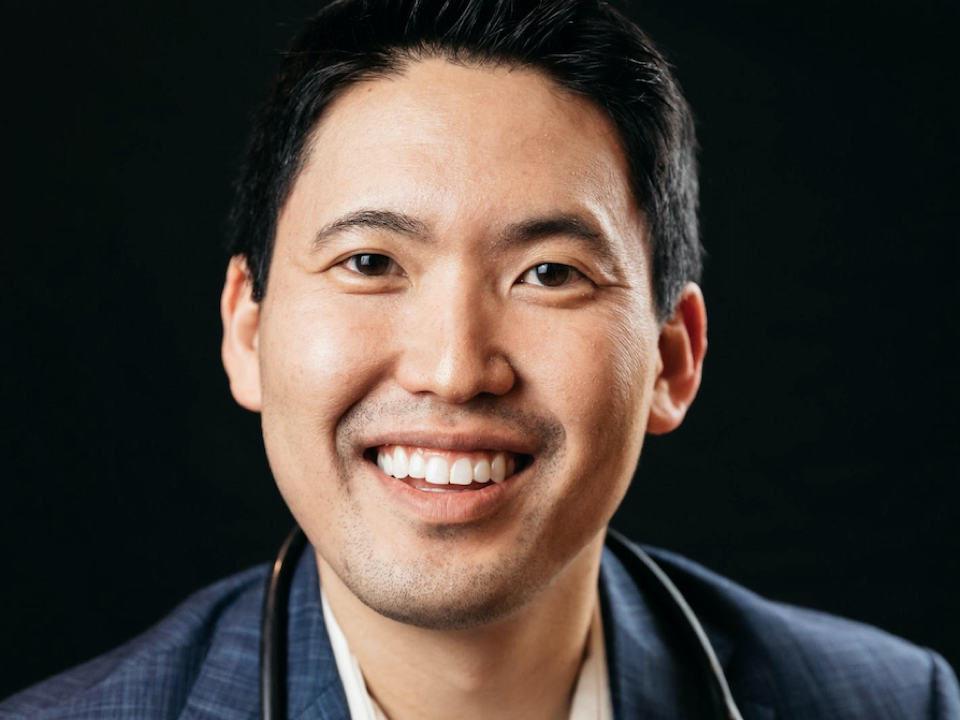
Dr. Daniel Sugai is a board-certified medical, surgical, and cosmetic dermatologist based out of Seattle, WA. With training at Massachusetts General Hospital, Brigham & Women's, Beth Israel Deaconess Medical Center, and Boston Children's Hospital, he has trained at some of the most top-notch facilities in the country! In this conversation, Dr. Sugai tells us about the patient relationships he's maintained as he made his way from the East Coast to the West Coast, debunks skincare myths, shares he and his wife's favorite products and tons more. Read on!
Q: First and foremost, we'd love to hear about your journey in dermatology. How did you get started, and how did you get to where you are today?
I initially went into medical school thinking I was going to go into plastic surgery. I like the visual aspect of plastics, the art aspect. I was an art minor and a biology major in college, so I liked combining art and the sciences. When I entered medical school I was like hey, I'll do plastic surgery, but I really liked the diagnostic part of dermatology and you lose that in plastic surgery. So just looking at a rash, I can diagnose what it is pretty quickly — like a flashcard!
But it’s not always like that. If you don't know what it is, you do a biopsy and you can work with your hands — there are a lot of procedures in dermatology. I was able to combine the art aspect, the visual aspect, the detective work, and cosmetics, so it was just a really great fit.
I decided during my third year of medical school to apply. Dermatology at the moment, and when I was applying almost a decade ago, was a very competitive field to get into — the most competitive you could say. You need top-notch boards scores, grades, honors. For me, I was class president, president of the AOA Honor Society, I had to score well on my board exams, and honor my rotations in third year. I was fortunate enough to get into a residency program. I went to Harvard Medical School’s combined dermatology program and trained at Massachusetts General Hospital, Brigham & Women's, Beth Israel Deaconess Medical Center, and Boston Children's Hospital. I was very fortunate to have training at different hospitals that are top-notch, and world-class.
After you're done with your four years of training after medical school, you then take a board exam. You take a board exam, you become certified with the American Board of Dermatology, and then you become a fellow of the American Academy of Dermatology. That's why after my name is Daniel Sugai, MD, FAAD. This just means I'm a Fellow of the American Academy of Dermatology. Then you're done with your training finally, and you start practice. Right now I'm in the Seattle area — I'm in Bellevue and Renton, WA, specifically — and I do medical, cosmetic, and surgical dermatology at two offices.
Q: You've always been incredibly passionate about making long-term relationships with your patients. How do these relationships affect the way you practice? What have you learned about dermatology and your patients from building these strong relationships?
Probably the most important thing to me is my established patients who I have long-term relationships with from over the last five years since I moved from Boston to Seattle. I’ve made some really great connections with patients who are just the best. If someone passes away, I actually do feel like I'm losing a family member. They mean a lot to me. Social media has become a second job, but I always tell my patients that they are still my first priority.
I love that about dermatology and being an outpatient doctor. I can make long-term relationships by having continuity. If I worked in the emergency room, you don't get that continuity. So I really do enjoy that part of my job. They're able to share in my recent successes on social media, and they're very proud to say their doctor’s on, say, the Today Show. They've been very nice and supportive throughout this process, because they've known me from when I was first fresh out of residency at Harvard. I'm just very proud to be their doctor as well. So it's a nice mutual relationship we have.
Q: What do you love the most about what you do?
In addition to those long-term relationships, it's probably that I'm able to connect with different generations. I think that my impact in-clinic and also online has been really great for the younger generations, because there are a lot of mental health issues going on right now. I feel for the younger generations, and so for me to just help them with one aspect of their life, like to help clear their skin, that's when I feel like I probably get the most emotional in my job.
I feel super fulfilled when they say that they feel great going to school, or they have better interactions with their friends and family. It's just really touching. The other part is that you see a lot of the younger generations are hurting because of what's going on, in terms of virtual learning. I think social media itself can definitely be hard on young minds. For me to be there to help them out and kind of debunk things in the clinic or online is a really nice part about my job as a dermatologist.
Q: What is a myth about skincare that you want to debunk?
There are so many myths, but I think the ones that are important to address would be: the myth that sunscreen, its ingredients, and filters in general are known to cause skin cancer. There are many posts on this on TikTok...there are conspiracy theorists that are out there saying that the government's out to cause skin cancer and such with these sunscreens. Yes, the benzene controversy was disappointing but benzene was a contaminant found in sunscreens and sunscreens are not inherently dangerous. People can misinterpret that news and spin it into demonizing ALL sunscreens. Sunscreens themselves do protect skin from UV radiation, and we know that the sun does cause skin cancer.
The other thing is the myth that you can’t get affordable, great, effective skincare products at your local drugstore. I try to put a range of different options on my shop on Shop My Shelf, whether it's high end in price, or affordable options that you can find easily at your local drugstore. I don't like that people are trying to say that you get what you pay for with skincare. There's “medical grade” labeling on some products, and they're trying to throw that out there like “Oh, you have to buy medical-grade for it to absorb well in your skin.” It’s a total myth.That's not a real term really, it’s sort of a made-up term just to scare people into buying their product.
Another thing is with retinoids: people say all retinoids thin your skin, but it actually does the opposite by increasing collagen production. So those are probably the three things I deal with on social media and in-person in my clinic.
The part that really gets me upset is the skin cancer and sunscreen myth because I really want to increase awareness on that. People just try to fight you and say “No, the sun doesn't cause skin cancers, sunscreens cause skin cancer.” And I counter by saying, “Well, most of my patients who have skin cancer usually say “I wish I wore sunscreen when I was younger and didn’t sit out at the beach and tan all day.”
Q: What are some common mistakes you're seeing people make in skincare?
People are using too many products. They're just coming in and they have a red face that's peeling and raw from seeing too many nice products on Tik Tok that they just want to try all at once. I always say to space them out a week or two apart. You can even test on your neck first. But really try to first understand what your skincare goals are, and then choose your products after that. Don’t just try something because it looks cool, it’s trending on TikTok, or was in a viral video. I've seen people overdo it. They look at percentages and figure the higher the percentage, the better. That's not necessarily true. I see people put on high percentage active serums on their face, and then we have to put on some pretty strong steroids to treat the rash that results from using that high percentage product.
Q: What is your best advice for someone who's struggling to find a skincare routine that works for them?
Understand your skin. First, what's your skin type? Is it dry, combination, oily, sensitive? Do you have any known sensitivities? If you do, really be careful with reading the ingredient lists and know what your goals are. For me in my mid-30s, I want to work on slowing down the aging process: reducing fine lines, wrinkles, and dark spots, protecting my skin from UV radiation and having healthier skin. Then you formulate your plan after that, and you might need to talk to your dermatologist on the fundamentals: sunscreen, moisturizer, and inquire if you're a good candidate for vitamin C, serums, retinoids.
I try to always emphasize that in-clinic and online: sunscreens are fundamental, you can have a moisturizer to keep your skincare skin barrier intact with the changing of the seasons because your skin is dynamic, and you have to keep up with the seasons as well. When you're starting off in skincare, you have to think about things like being combination or oily in the summer, but it could be completely different if you're starting off with your new skincare routine in the winter, and you might need to tweak it.
Q: What do you wish people were talking more about in skincare?
Think less about trying to be perfect and having poreless skin, and more about having healthier skin. I think that's where it comes to prevention. Moisturizer and sunscreen are the fundamentals really, and I think just keeping a nice healthy skin barrier plus protecting your skin from further UV radiation are key. I want to start doing more skin cancer awareness posts just because we have to strive for healthier skin and NOT perfect skin. That’s a message for the younger generations.
Q: What are some of your all-time favorite skincare products and why?
The two cleansers I like to use would be CeraVe's Hydrating Cleanser right now, and then in the summertime when my skin's a little bit more oily I'll do La Roche-Posay’s Purifying Foaming Cleanser. It’s really nice because I'm more oily in the summer and the foaming formulation is better at removing the excess oil.
In terms of vitamin C serums, this is kind of tricky because this is an evolving market. I've always liked the SkinCeuticals C E Ferulic since I was a resident. That was my go-to for the longest time. That will probably change as in the last year and a half I’ve been consistent with different vitamin C serums! I'm much more of a believer of vitamin C serums because of social media because I'm exposed to so many more vitamin C serums.
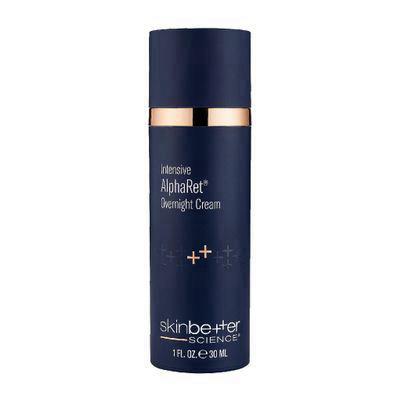
My other all-time favorite would be the retinoid from SkinBetter Science, AlphaRet. I'm a big fan of retinoids as everyone knows. It has so many benefits, but this one also pairs lactic acid with a retinoid, which is special because it does not cause any irritation. SkinBetter Science was able to put lactic acid molecules with the retinoid to give you some exfoliation that's gentle plus the retinoid benefit. So I think that one is my holy grail retinoid.
In terms of sunscreen, I have tons of sunscreen everywhere, and I have always liked EltaMD’s UV Clear since residency. To be honest, I’ve actually switched over to DRMTLGY’s SPF 46 Universal Tinted Moisturizer, which is a dupe of it. It's a nice light tint — not too thick and not going to stain the inside of my mask when I go to work or go to the store. It’s my go-to everyday sunscreen. My wife and I have it on our bathroom counter and we both share the bottle, that’s how we start the day. I still love EltaMD as a brand, but DRMTLGY is just very affordable.


Rapid Fire Round
Q: Worth the splurge:
SkinBetter Science AlphaRet and SkinCeuticals C E Ferulic. For both of them, you’re paying for the science behind it too. They do their studies and clinical trials behind everything — there's real science behind it. So I'd say that you're buying the science as well as the reputation.
Q: Favorite drugstore or budget find:
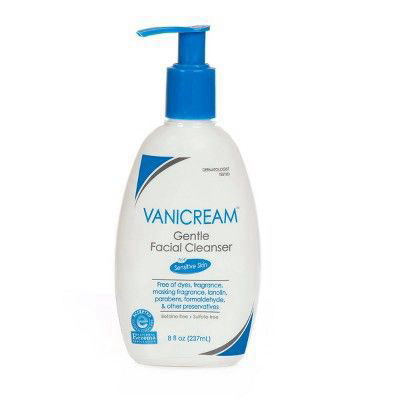
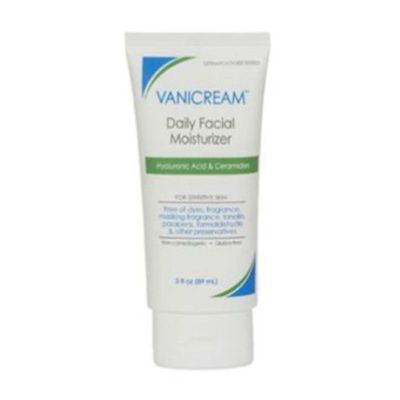
I like Vanicream a lot for my patients with sensitive skin and for myself. I think that's a very underestimated drugstore brand. So I like their facial cleanser and also their facial moisturizer!
Q: Latest beauty empty:
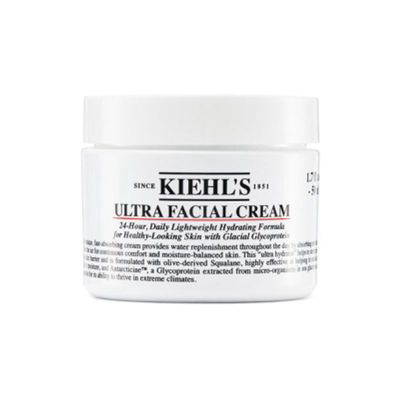
Kiehl's Ultra Facial Cream. I love that moisturizer. It's been really nice to use, and I think that's also worth the splurge as well. It’s hard to find though, I'm a little sad I ran out of it. I mentioned it on the Today Show and I tried to do a giveaway afterward but it was so hard to find. It’s so soothing and cooling on the skin, and works really well with your actives and your skincare routine.
Q: Recent discovery:
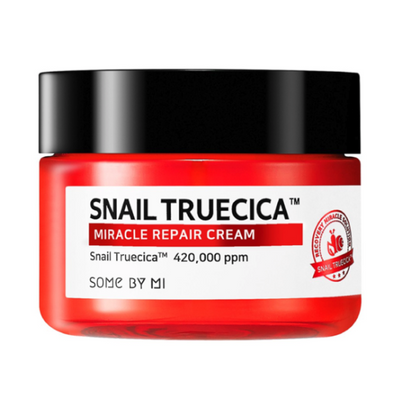
I’ve been dabbling more in K beauty, and so centella asiatica products are really pretty cool, very soothing. And snail mucin too! The one that I like most recently would be Some By Mi Snail Truecica Miracle Repair Cream. It's a beautiful red jar. It's so nice. So that's what I've found recently by diving into the world of K beauty!
Q: Product you can’t leave home without:
This is interesting because we’ve had to live in a hotel for the last month because I had to do repairs on my home and my kitchen. We actually took that DRMTLGY SPF 46 with us and that was our go-to sunscreen and something we made sure we had with us. Plus our retinoids!

Q: Brand that you wish more people knew about:
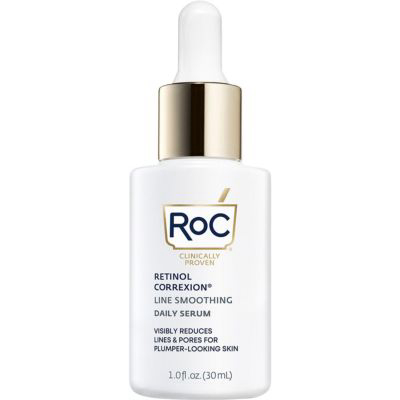
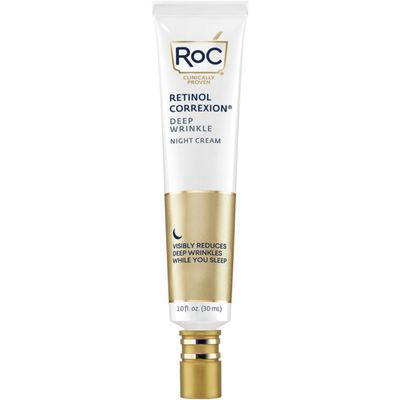
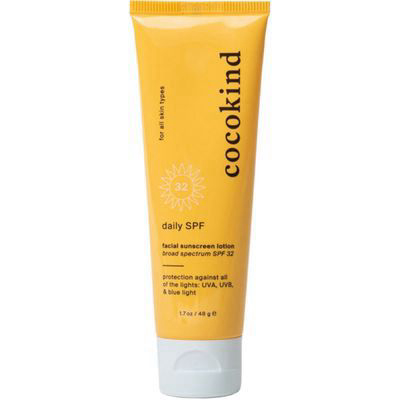
I think Vanicream for sure is underestimated. Something I’ve talked about on my TV segments recently in addition to Vanicream would be RoC. I like Cocokind too. It's a really nice brand that's using natural ingredients but not shoving the whole narrative of “all natural, all organic, and everything else is toxic” down our throats. I like the way they approach it without throwing a ton of essential oils into the mix. So if you're looking for that type of brand, use Cocokind! RoC is a brand that I think that a lot of people know about, but I think it's really picking up in terms of their retinol. Their retinol game has always been very strong. I've known about it since I was a resident.
For more of Dr. Sugai's favorite products, check out his shop below: